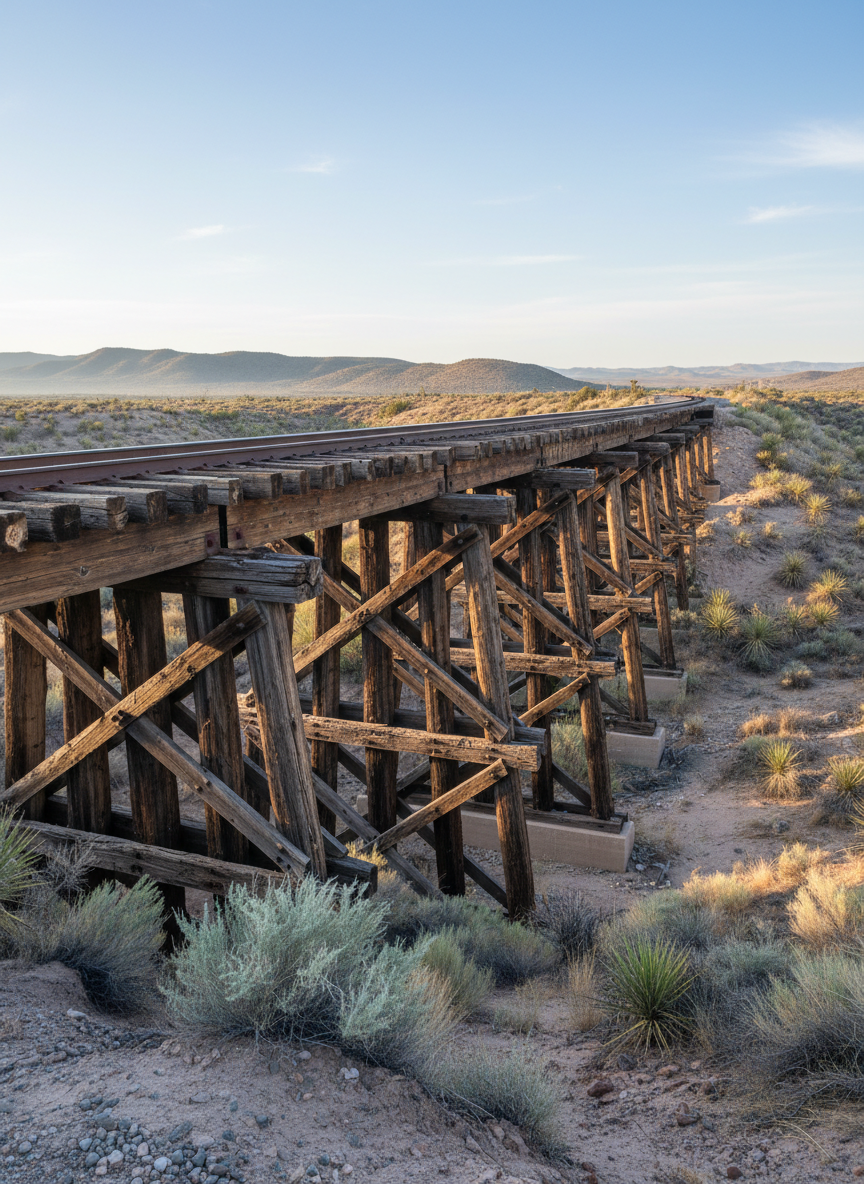
A meticulously detailed photographic realism image of a weathered wooden railroad trestle bridge crossing a dry arroyo in Southern New Mexico, the sun-faded timbers streaked with rust where iron bolts anchor the beams. Sparse desert vegetation—sagebrush, yucca, and low grasses—hugs the embankments, while distant foothills rise hazily beyond. Early-morning soft sunlight casts long, cool shadows from the trestle’s supports, emphasizing the geometric pattern of cross-braces and rails. Shot at a three-quarter angle from slightly below track level, the composition uses leading lines of rails disappearing into the distance, evoking a mood of quiet endurance and the bygone era of rail expansion, freight, and passenger travel that once connected remote communities in Otero County.

Otero Stories

Unearth true tales of southern New Mexico lives, from homesteaders and loggers to tuberculosis patients.
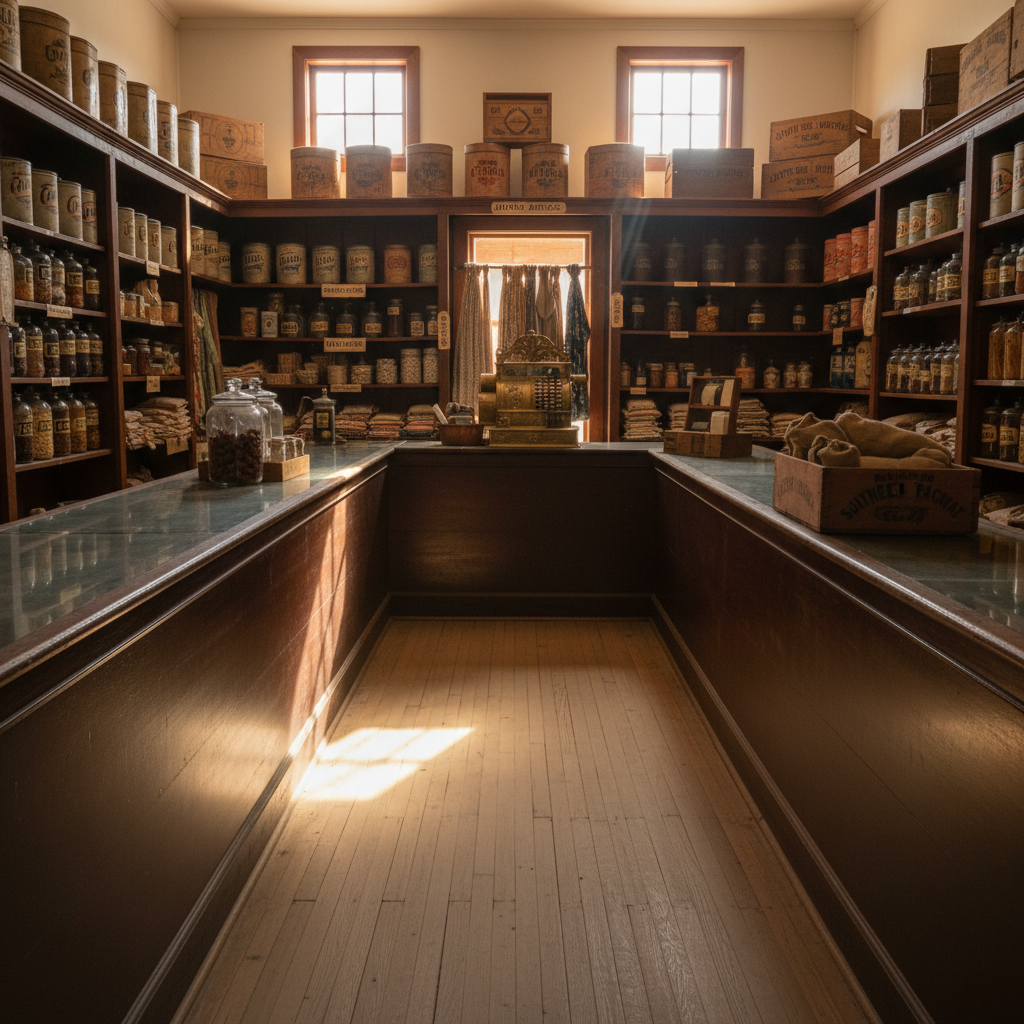
A photographic realism interior of a small historic mercantile in Southern New Mexico, carefully staged without people, with long, dark-wood counters worn smooth by decades of use. Shelves behind the counter are lined with era-appropriate goods: tin coffee canisters, glass jars with hand-lettered labels, folded calico fabrics, and wooden crates stamped with faded railroad logos. A brass cash register sits center frame, its ornate detailing catching the warm glow from high clerestory windows. Late-afternoon sunlight filters through, dust motes visible in the beams, casting gentle, nostalgic shadows across the plank floor. Shot at eye level with moderate depth of field, the composition guides the viewer’s eye down the aisle, evoking the everyday commerce and small-town businesses that shaped Otero County’s communities.
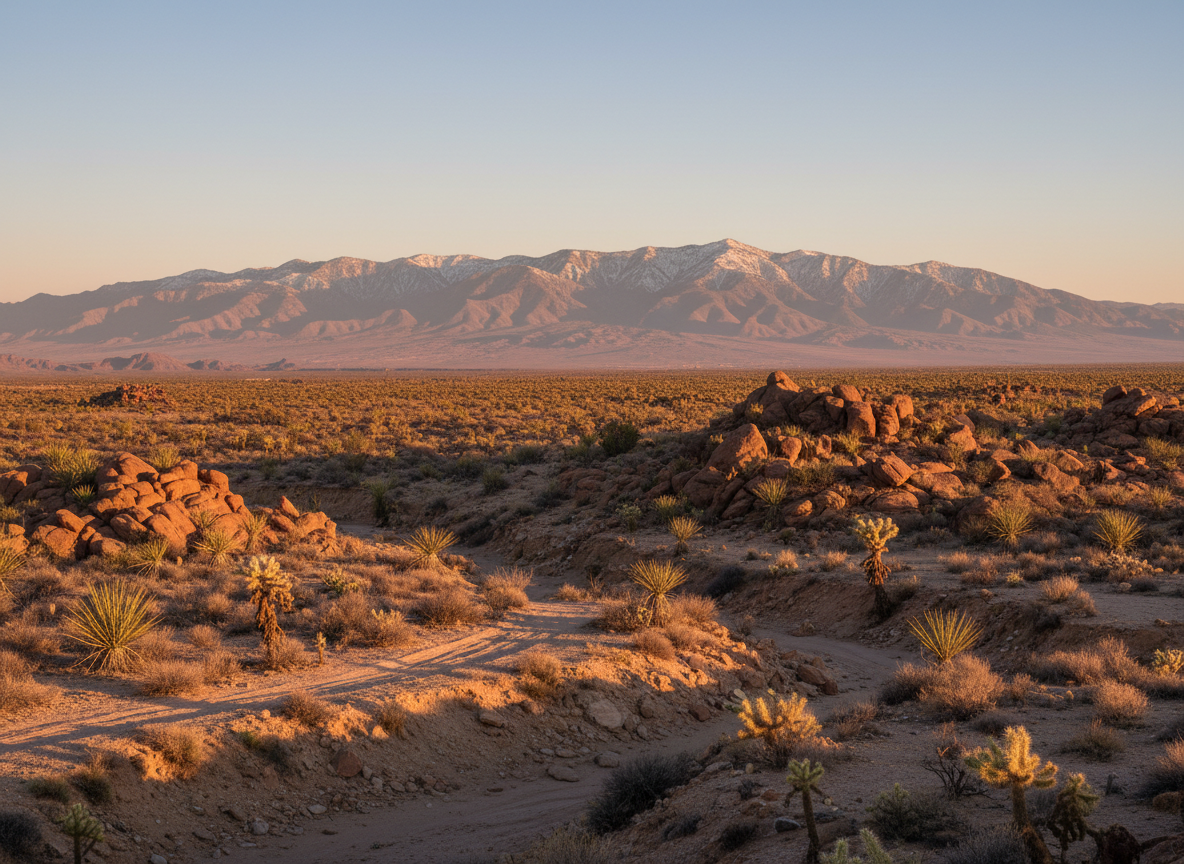
A wide, panoramic photographic realism view of Southern New Mexico’s desert basin and surrounding Sacramento Mountains, with layered ridgelines leading toward distant snow-dusted peaks. The foreground features sun-bleached yucca plants, scattered cholla cactus, and rust-colored rocks, with faint wagon ruts barely visible in the sandy soil. Late-afternoon golden light grazes the terrain, carving sharp shadows into arroyos and emphasizing the textures of rock and scrub. Above, a vast, pale blue sky fades toward warm peach near the horizon. Shot from a slightly elevated vantage point with deep focus, the composition follows the rule of thirds, evoking a grand, contemplative mood that hints at centuries of settlement, travel routes, and untold frontier stories anchored in this landscape.
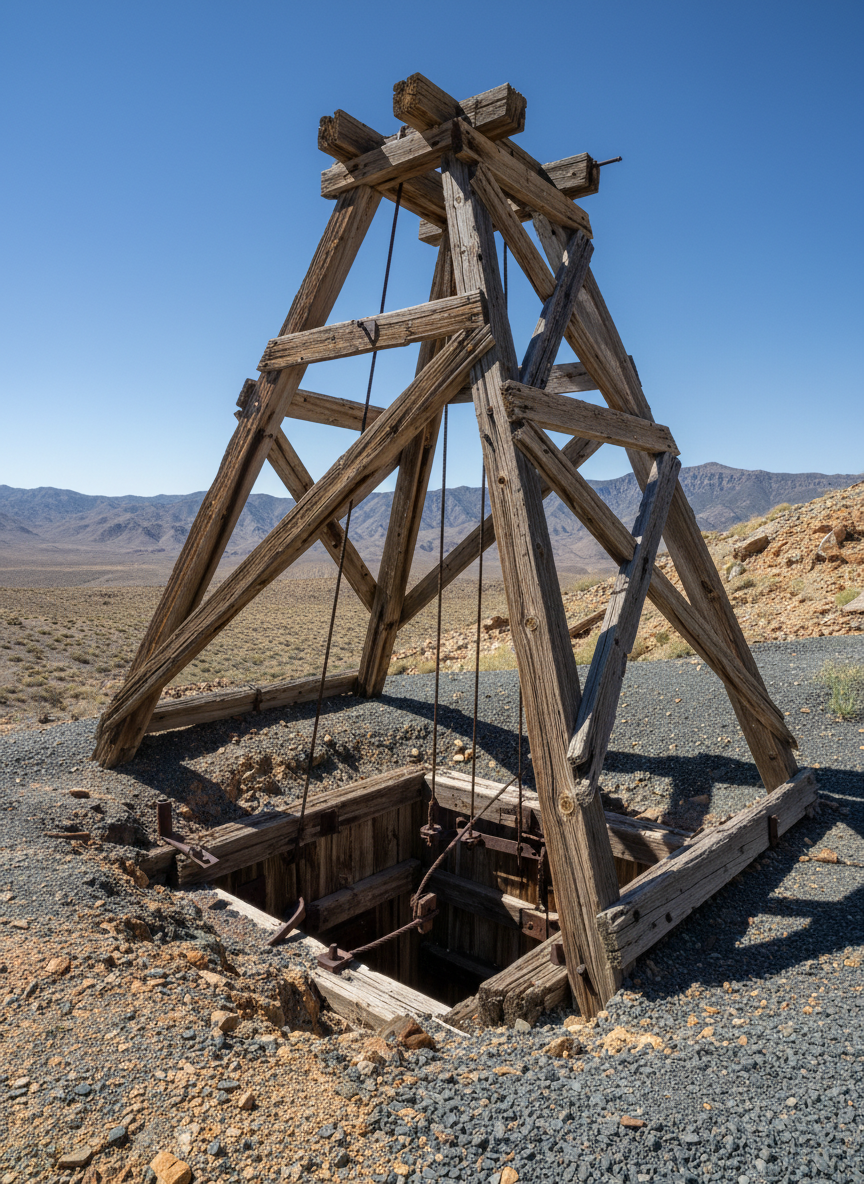
A photographic realism close-up of an abandoned wooden mine headframe perched on a rocky slope in the Sacramentos, its sun-bleached planks cracked and splintered, rusted steel cables hanging loose into a dark, gaping shaft. Surrounding the structure, tailings piles shimmer with hints of ochre, coppery green, and charcoal gray gravel. Harsh midday desert light beats down from a cloudless sky, creating stark contrasts and crisp, angular shadows that accentuate the precarious geometry of the headframe. Shot from a low-angle perspective, the camera tilts slightly upward to let the structure dominate the frame, with a shallow depth of field softening the distant ridges. The scene feels gritty and austere, capturing the boom-and-bust legacy of mining in Southern New Mexico.

Upcoming walks

2025-09-18

Heritage Plaza

Alamogordo, NM

2025-09-23

Mountain Park

High Rolls

2025-09-28

Depot Platform

Orogrande, NM

2025-09-20

Tularosa Museum

Tularosa, NM

2025-09-24

Lions Pavilion

Cloudcroft, New Mexico

2025-09-30

Old Sawmill

Weed, NM

2025-09-21

La Luz Museum

La Luz

2025-09-27

Trailhead Kiosk

Dog Canyon

2025-10-01

Sunspot Observatory

Sunspot, NM

Why These Places Still Matter

Explore how railroads, ranches, and sanatoriums shaped Otero County, leaving stories etched into canyons and cottonwoods.

Follow families, workers, and outlaws through desert towns whose fortunes rose and fell with water, timber, and ore.
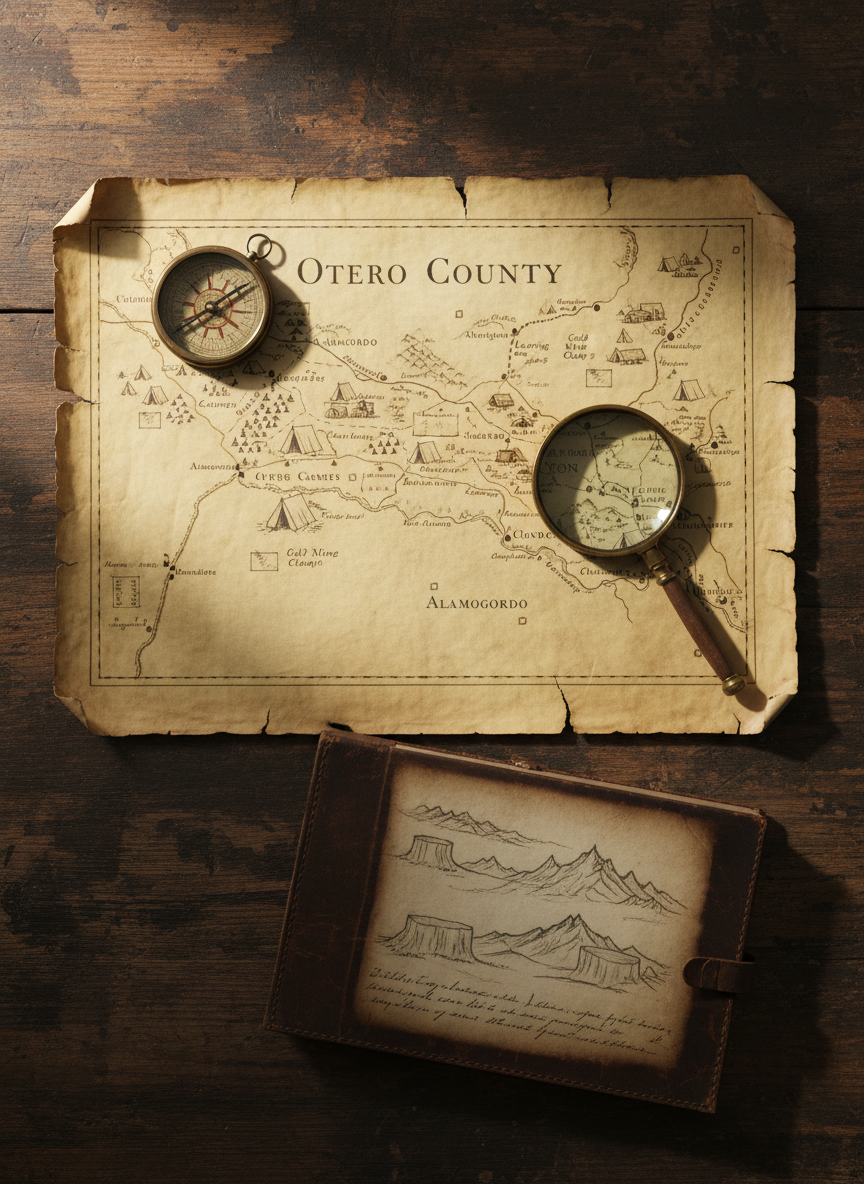
An old hand-drawn map of Otero County spread across a scarred wooden desk in photographic realism, its yellowed paper edges curled and frayed, inked with faint routes for railroads, logging camps, mining claims, and early townsites. Around the map lie a tarnished brass compass, a magnifying glass with slight scratches on the lens, and a leather-bound field notebook partially open to sketched mesas. Soft, diffused window light from the left casts gentle shadows and subtle highlights across the textured paper, creating an archival, scholarly atmosphere. Shot from a directly overhead, bird’s eye perspective with crisp focus, the composition feels orderly and professional, suggesting careful research into the region’s layered history of settlement, industry, and everyday life.